ReALM-GEN 2026 (ICLR Workshop) arXiv:2603.07860 formerly Guess & Guide
SpinSparse Scheduled Diffusion Guidance for Inverse Problems
Restorations / drag the dividers
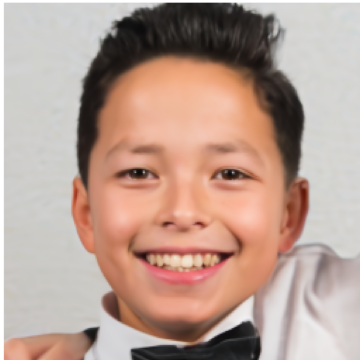
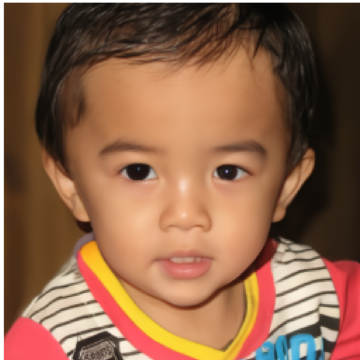
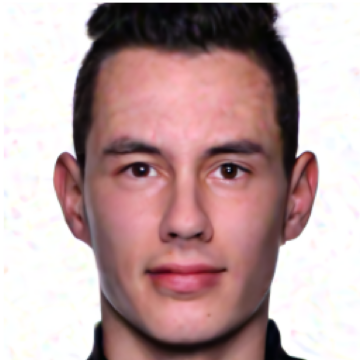
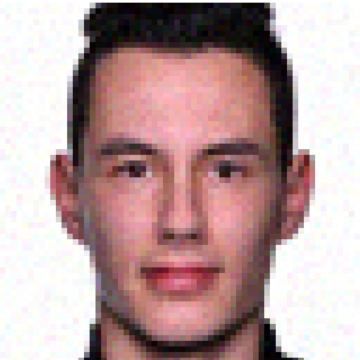
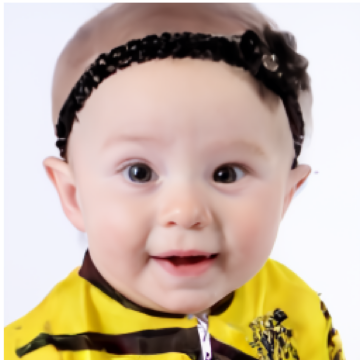
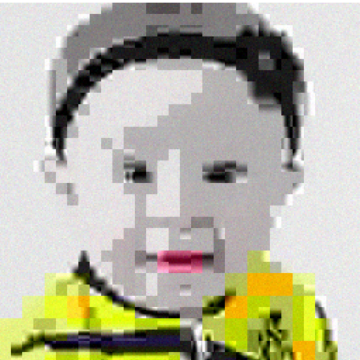
In each picture the degraded observation is on the left and the Spin restoration on the right. Both images are unprocessed.
In short
Spin replaces expensive denoiser guidance with a lightweight likelihood surrogate and sparse pixel-space optimization: no backpropagation through the denoiser, nor through the encoder-decoder in latent diffusion.
Pretrained diffusion models are strong priors for Bayesian inverse problems, where a clean signal is recovered from a measurement y = 𝒜(x) + n without retraining for every degradation operator. The bottleneck is guidance: many zero-shot posterior-sampling methods require vector-Jacobian products through the denoiser at each denoising step, and sometimes through the latent encoder-decoder.
Spin avoids this cost by separating learned prior refinement from data-consistency enforcement, while maintaining strong reconstruction quality across diverse inverse problems.
Backpropagation-free guidance
Spin avoids VJPs through the denoiser and encoder-decoder, using gradients only through the forward operator 𝒜 during explicit data-consistency optimization.
Two-phase inference
A fixed-t* warm-start phase produces an initial guess through denoise-optimize-renoise iterations, then a sparse guided-denoising phase refines it at selected timesteps.
Broad inverse-problem coverage
Evaluated on FFHQ, ImageNet, and FFHQ latent-diffusion experiments across linear and nonlinear tasks including deblurring, super-resolution, inpainting, JPEG restoration, phase retrieval, and HDR reconstruction.
Method / two phases
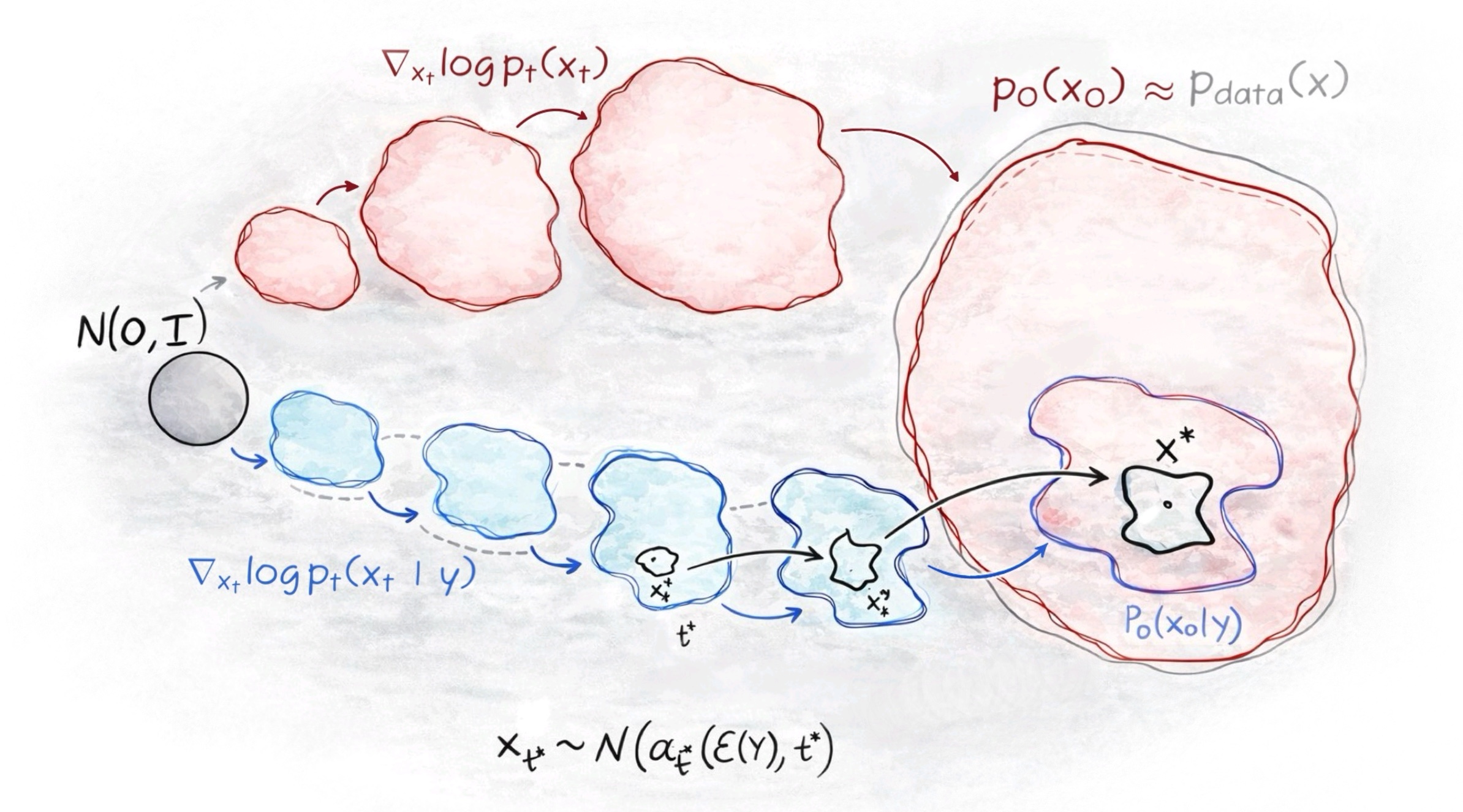
Spin decomposes posterior sampling into two phases. The diffusion prior stays forward-only; measurement consistency is enforced with lightweight optimization outside the denoiser.
Schematic. The number and position of the loop iterations and of the guided timesteps are illustrative.
Warm start: an initial sample at t*
Spin first seeks an approximate sample at a fixed intermediate timestep t*. Each warm-start iteration:
- denoises the current state and decodes it to image space,
- optimizes the image to better match the observation under 𝒜,
- encodes and re-noises the optimized image back to the same timestep.
This creates a useful posterior-informed starting point and avoids running a full guided reverse process from pure noise.
Guided denoising: a sparse grid of timesteps
Starting from the warm-start sample, Spin follows a sparse grid of timesteps. At each selected timestep, it alternates between:
- Prior refinement: forward-only denoising and diffusion transitions preserve realism.
- Data consistency: pixel-space optimization pulls the reconstruction toward the observation.
- Re-noising: the optimized estimate is returned to the noisy trajectory before continuing.
The guidance schedule concentrates optimization around intermediate noise levels, where the denoiser can still correct optimization artifacts while the sample already carries useful structure.
Results / quality
Spin is evaluated on both pixel-space and latent-space diffusion models. The main paper reports LPIPS as the primary metric, with PSNR and SSIM in the supplementary material.
| Task | Spin | DAPS | DPS |
|---|---|---|---|
| Gaussian Deblur | 0.17± 0.06 | 0.19± 0.06 | 0.16± 0.05 |
| Motion Deblur | 0.13± 0.04 | 0.19± 0.06 | 0.21± 0.06 |
| Super-Resolution ×4 | 0.20± 0.07 | 0.19± 0.06 | 0.22± 0.07 |
| Super-Resolution ×16 | 0.35± 0.08 | 0.45± 0.10 | 0.36± 0.08 |
| Box Inpainting | 0.14± 0.04 | 0.12± 0.04 | 0.20± 0.08 |
| JPEG (QF=2) | 0.16± 0.06 | 0.22± 0.07 | 0.28± 0.07 |
Representative FFHQ results from the main paper. A dot marks the lowest LPIPS in each row.
Results / cost
Quality-speed tradeoffSpin is best or second-best on most FFHQ pixel-space tasks while being the fastest method in the reported tables.
GeneralityThe same inference framework is used across linear and nonlinear inverse problems, including latent diffusion settings where avoiding encoder-decoder VJPs is especially important.
Limitations
The choice of the warm-start timestep t* and the spacing of guided timesteps are important. Starting too early increases runtime without clear quality gains, while starting too late can produce artifacts because the denoiser has less opportunity to correct the optimized estimate.
Spin replaces dense denoiser-gradient guidance with a two-phase procedure: a fixed-timestep warm start and sparse scheduled pixel-space guidance.
This yields faster and more memory-efficient inference while maintaining competitive reconstruction quality across FFHQ, ImageNet, and latent-diffusion experiments.
Citation
@article{shtanchaev2026sparse,
  title={Sparse Scheduled Diffusion Guidance for Inverse Problems},
  author={Shtanchaev, Abduragim and Ilina, Albina and Janati, Yazid and Asadulaev, Arip and Takáč, Martin and Moulines, Eric},
  journal={arXiv preprint arXiv:2603.07860},
  year={2026}
}
ReALM-GEN 2026 (ICLR Workshop) / arXiv:2603.07860